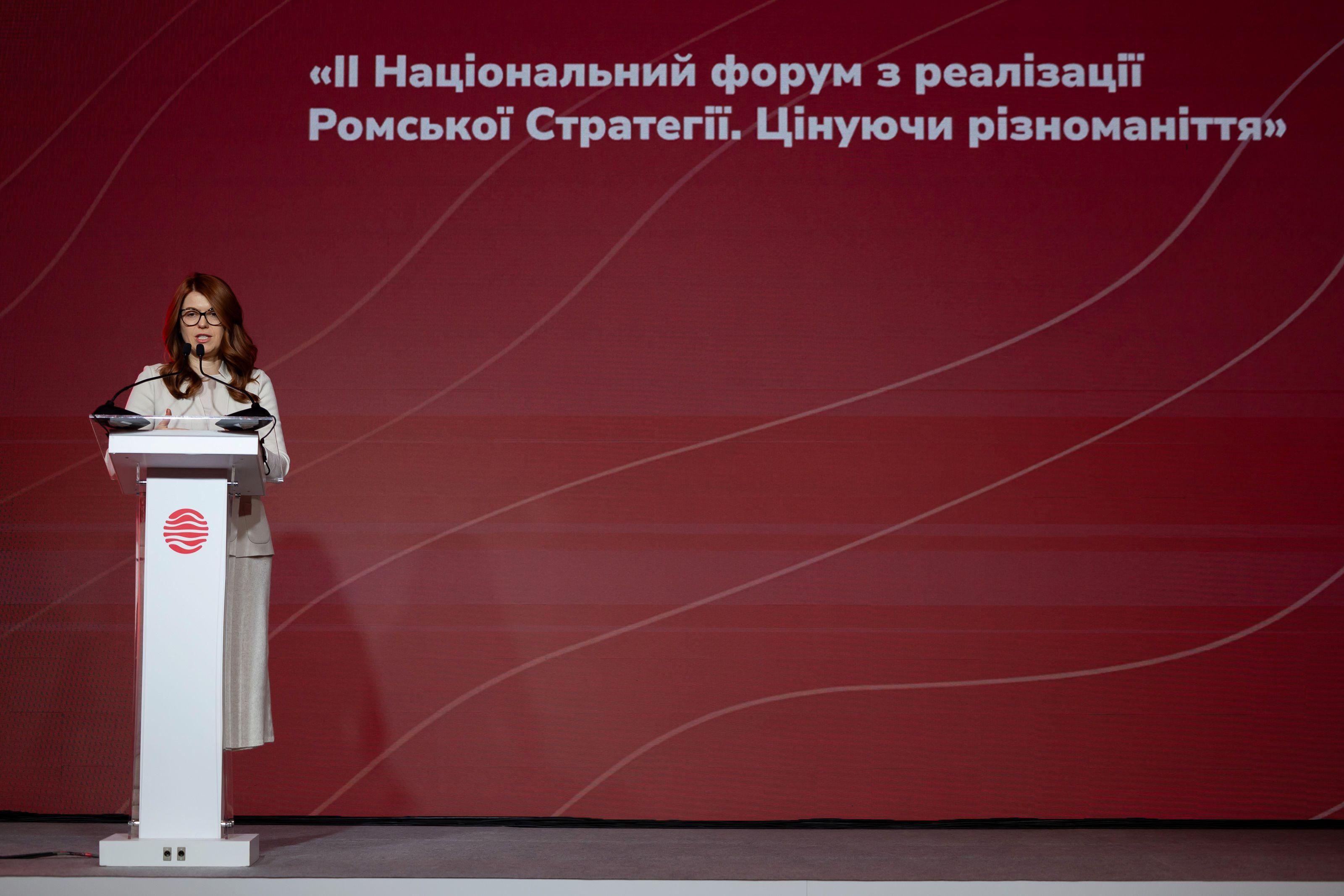

Liudmyla Shemelynets: Ukraine Demonstrates Significant Progress Toward Equality
03/03/2026

This was emphasized by Liudmyla Shemelynets, First Deputy Minister of Social Policy, Family and Unity of Ukraine, during the opening of the Second National Forum on the Implementation of the Roma Strategy, “Valuing Diversity.”
The event became one of the largest national platforms for discussing current challenges and prospects for the development of the Roma minority, bringing together Roma leaders from various regions of Ukraine, representatives of state authorities, international partners, the diplomatic corps, the expert community and civil society organizations.
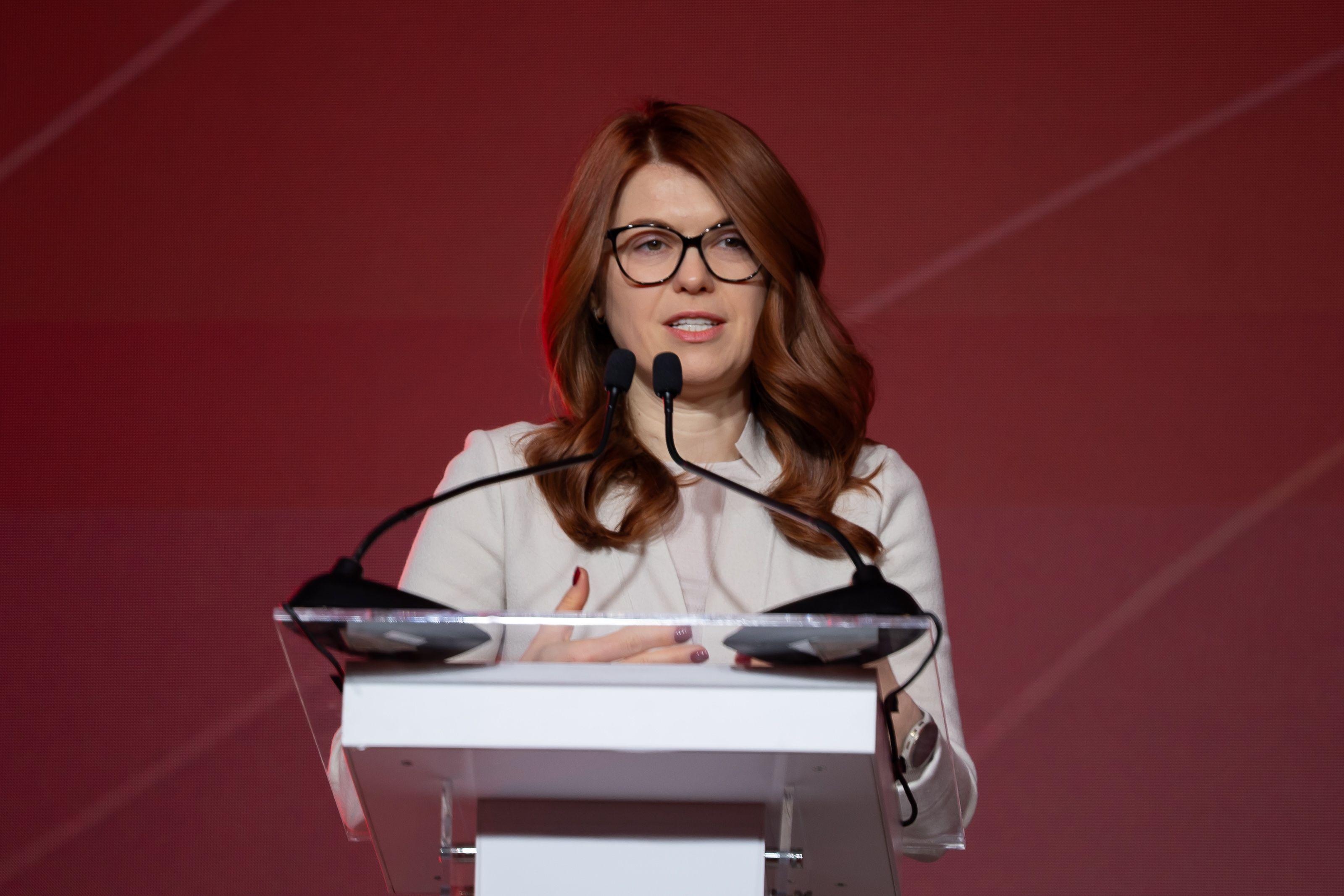
“When we speak about the implementation of the Roma Strategy, we must first and foremost speak about trust that must be built both between the Roma national minority and state institutions. Today, our key priority is not working for people, but working with people. Only when individuals are active participants of state-building, and when society and service users – including recipients of social services – have the opportunity to influence how these services are delivered and to ensure equal access – that is what matters most,” noted Liudmyla Shemelynets, addressing the participants.
In turn, the Ambassador Extraordinary and Plenipotentiary of Canada to Ukraine, Natalka Cmoc, stated that Ukraine’s European integration aspirations are directly linked to how consistently and systematically the state ensures the protection of the rights of national minorities.
“It is our collective responsibility to advocate for equal opportunities for everyone — for every individual, every woman and every man. This is even more important for Ukraine in times of war, and it will remain equally important for the country after the end of the war. Ukraine must ensure that every member of society can genuinely defend their country and contribute to building a strong and inclusive nation.”
Anzhelika Bielova, President of the Roma Voice and the organizer of the event, noted that the implementation of the Strategy is primarily about shared responsibility and systematic cooperation between the state and the Roma community. According to her, it is crucial that Roma women and men are not only recipients of services but also full-fledged participants in shaping policies that directly affect their lives.
In addition, the Forum participants emphasized the need to move from ad hoc solutions to long-term systemic changes in the areas of education, employment, social protection, healthcare, and access to administrative services.